Offshore research shows hidden methane emissions during loading operations and the value of UAV-based measurement and real-time field data.
Read time: 4 minutes
Offshore methane emissions remain one of the least understood components of the global emissions landscape. While production platforms, flaring, and venting are relatively well studied, other parts of the offshore value chain have received far less attention.
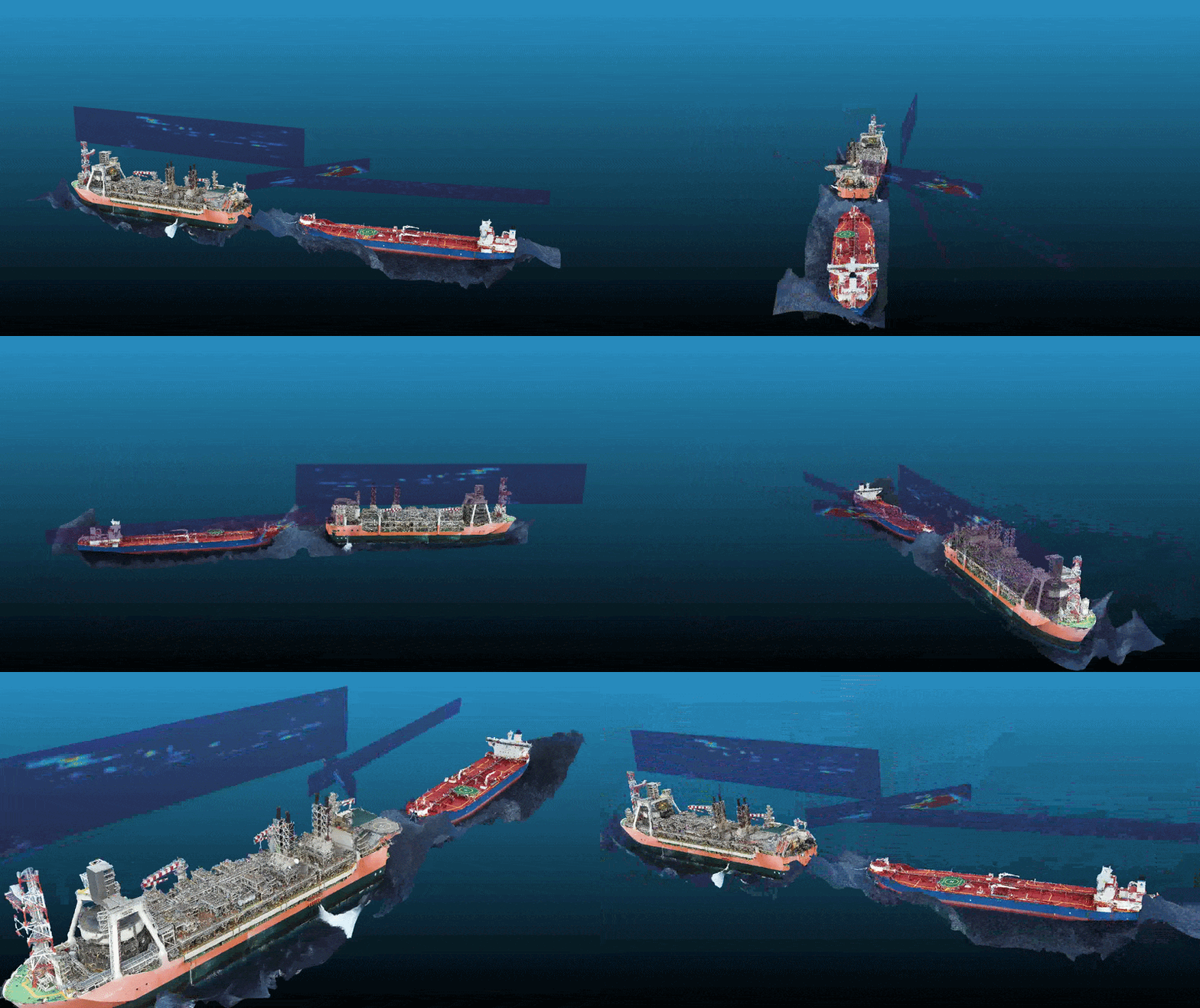
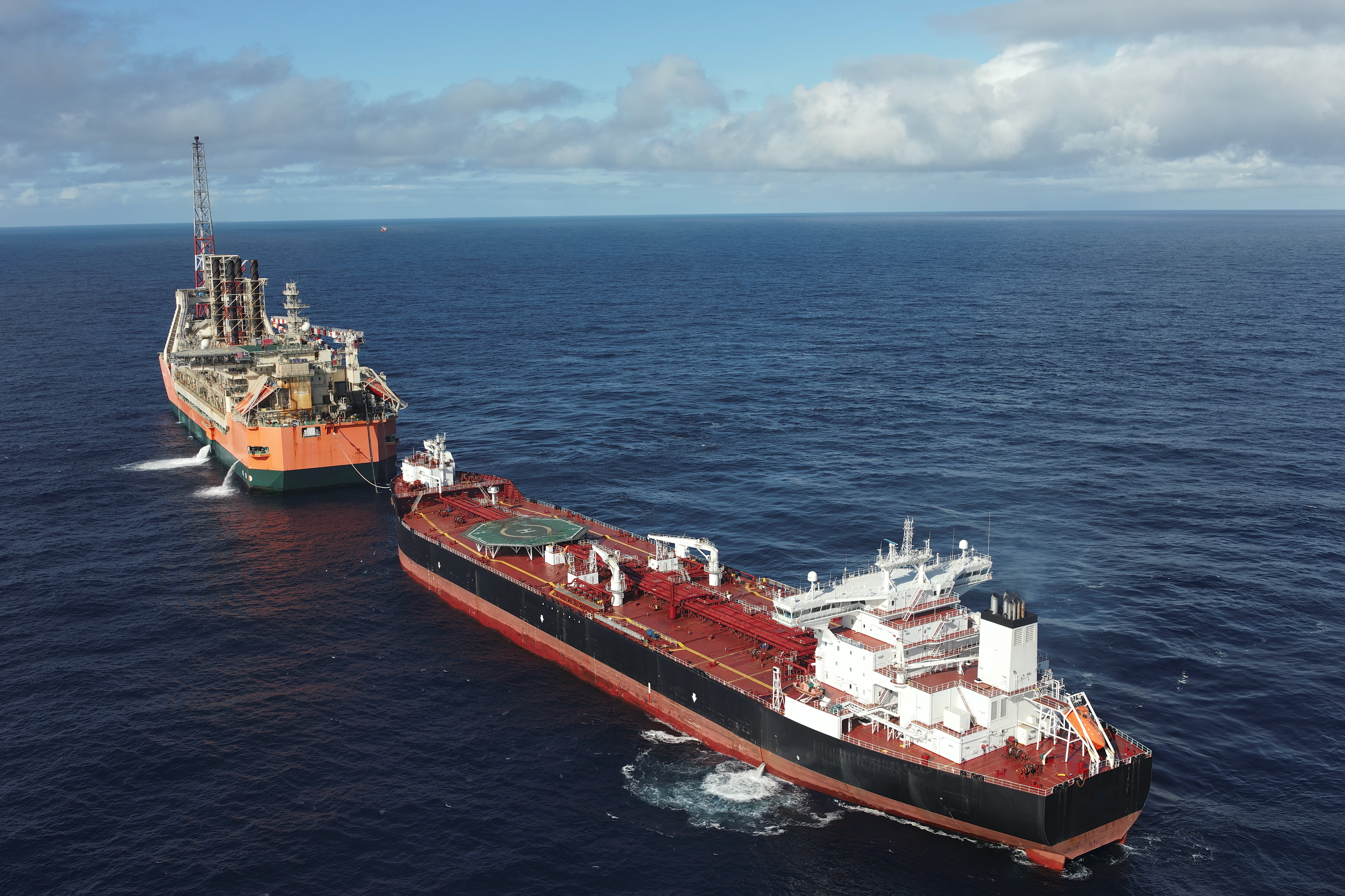
A recent study published in Environmental Science: Processes & Impacts highlights one of these gaps: methane emissions during oil loading operations to shuttle tankers. The work was conducted at a Floating Production Storage and Offloading (FPSO) asset for a major operator on the UK Continental Shelf and combines aircraft and UAV measurements across a full loading cycle to better understand how emissions occur and how much may currently be missing from inventories.
A Previously Under-Characterized Source of Emissions
The study focuses on emissions associated with transferring oil from an FPSO to a shuttle tanker. While these operations are routine offshore, their methane emissions have historically been difficult to quantify.
Using both SeekOps UAV and the Facility for Airborne Atmospheric Measurements (FAAM) aircraft measurements, the study observed that methane emissions increase during loading events, with estimated rates spanning a wide range depending on measurement approach and sampling conditions. Importantly, the two independent measurement methods were correlated across event type, with higher emissions during tanker loading activity.
What makes this finding particularly important is that these emissions are not tied to static infrastructure, but are driven by operational activity at the FPSO during loading. When scaled over time, the study found that loading-related emissions can contribute a meaningful fraction of total site emissions, suggesting that inventories focused only on steady-state processes may miss a significant portion of the picture.
Why This Matters for Methane Inventories
Traditional methane inventories rely heavily on bottom-up methods, where emissions are estimated based on equipment counts, emission factors, and assumed operating conditions.
This study reinforces a growing industry realization: not all emissions fit neatly into those assumptions.
Offshore operations, especially on FPSOs like the one in this study, are inherently dynamic. Activities such as loading cycles, maintenance, and process fluctuations introduce variability that is difficult to capture with static emission factors alone. As a result, inventories may underestimate emissions if these transient events are not explicitly measured.
The Role of Measurement-Based Approaches
One of the most important aspects of this study is its reliance on real-time measurements. By directly observing methane concentrations during real operations, the researchers were able to capture emissions that would likely otherwise go unaccounted for.
This represents a broader shift in methane monitoring, from estimating emissions based on assumptions to measuring what is actually happening in the field.
It also highlights the importance of capturing emissions across complete operational cycles, particularly for offshore assets like FPSOs, where emissions can vary significantly depending on operational state.
Implications for Offshore Measurement Strategies
The findings suggest that offshore methane monitoring must extend beyond traditional sources and account for how operations evolve over time. Capturing emissions from loading events, for example, requires both spatial coverage and temporal awareness, understanding not just where emissions occur, but when.
Technologies deployed offshore must therefore be capable of responding to dynamic conditions, capturing transient plumes, and operating safely within complex logistical environments such as FPSO loading operations.
What This Means for SeekOps
For SeekOps, this study reinforces several core principles that have shaped our offshore measurement approach.
First, it highlights the importance of mobility and adaptability. Offshore emissions, particularly those associated with operations like FPSO loading, do not always occur in predictable locations or at steady rates. UAV-based systems provide the flexibility to respond to operational events as they happen.
Second, it strengthens the case for top-down quantification. By measuring methane concentrations downwind and reconstructing plume behavior through a flux plane, SeekOps captures emissions as they manifest in the atmosphere rather than relying on assumptions about source behavior. In addition, the study showed that UAV-based measurements were broadly consistent with airborne observations collected during the same operations, providing an additional layer of validation across independent measurement approaches.
Third, the study underscores the importance of in situ environmental measurement. Offshore plume behavior is heavily influenced by wind, stability, and marine boundary-layer effects. Measuring these variables directly during flight improves the reliability of emission estimates in dynamic conditions. It also increases the granularity of emissions attribution as we consider the variables.
Finally, the study reinforces a broader industry shift: measurement is uncovering emissions that inventories alone cannot fully describe. SeekOps’ approach is designed to complement existing inventory methods by helping operators reconcile measured data with reported values and identify gaps, particularly for operational emissions that are not easily captured in traditional frameworks.

Looking Ahead
Offshore methane monitoring is entering a new phase. As regulatory frameworks evolve and expectations for transparency increase, operators will need measurement strategies that reflect real-world conditions that capture both steady-state emissions and transient operational events.
Studies like this one — and recent work such as Deshpande et al. (2025) — provide a roadmap for how to get there.
For SeekOps, they reinforce the role of UAV-based measurement as a critical tool for understanding offshore emissions in full context, not just what is emitted, but when, where, and why.
References
Deshpande, S., Collins, E., Joynes, I., & O’Keeffe, R. (2025). Methane emissions measurement insights from an Offshore Measurement, Monitoring, Reporting and Verification study. Australian Energy Producers Journal, 65(2), EP24038. https://doi.org/10.1071/EP24038
Methane emission from shuttle tankers during standard oil loading operations. (2026). Environmental Science: Processes & Impacts. Royal Society of Chemistry. https://pubs.rsc.org/en/content/articlehtml/2026/em/d5em00768b
Ravikumar, A. P., et al. (2019). Single-blind inter-comparison of methane detection technologies – results from the Stanford/EDF Mobile Monitoring Challenge. Elementa: Science of the Anthropocene, 7, 37. https://doi.org/10.1525/elementa.373